Recording Symptoms
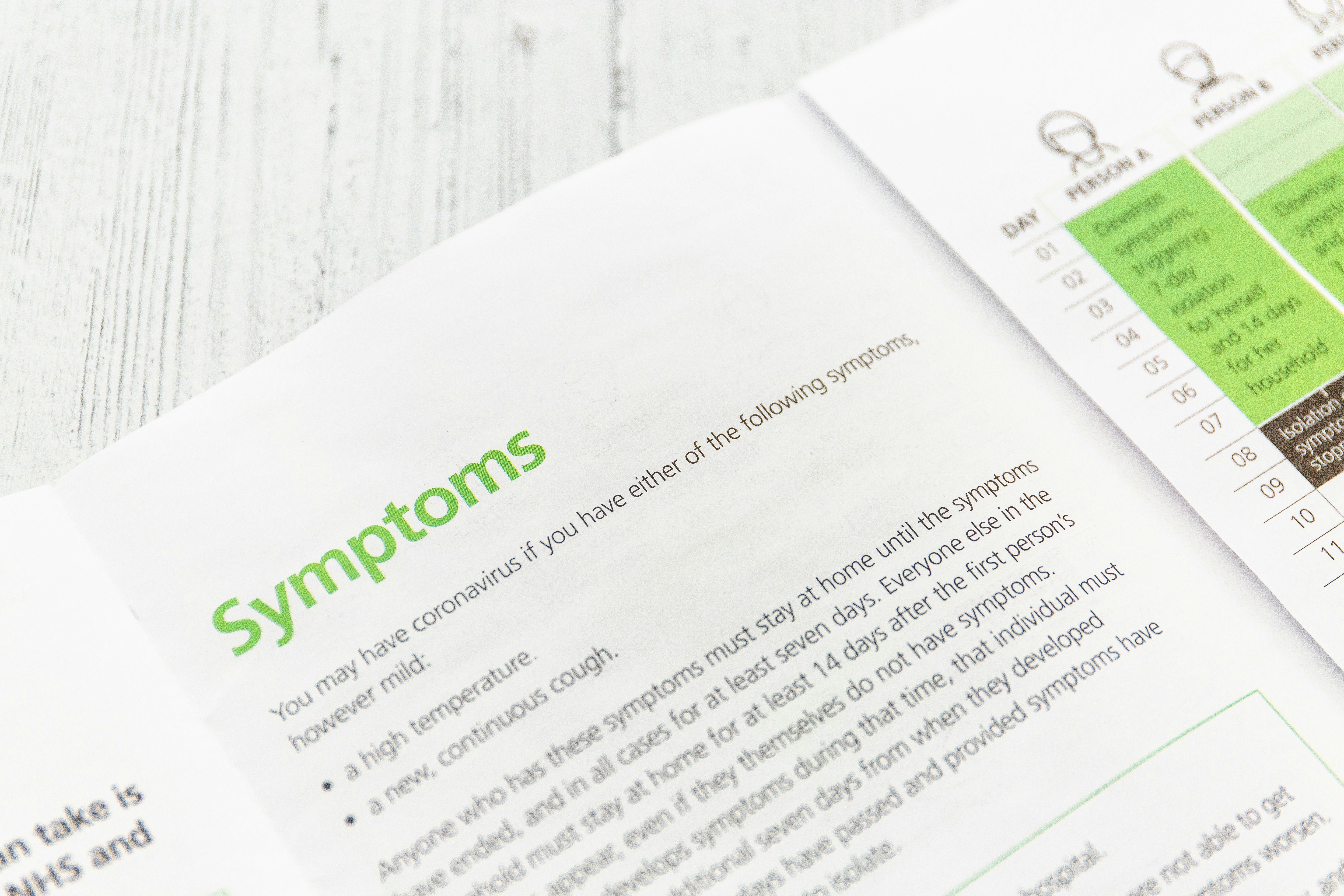
The reason for a visit is the first thing a clinic acts on, and it arrives at the desk in the patient's own words — "my chest feels tight", "I keep waking in the night", "I've been thirsty for weeks". Written down as a sentence, that is a note. Captured as a clinical term, it is something the clinician can work from before the patient sits down, and something the clinic can account for afterwards. VeriPath Health Clinics records it at the moment of booking.
The patient's words, turned into a clinical term
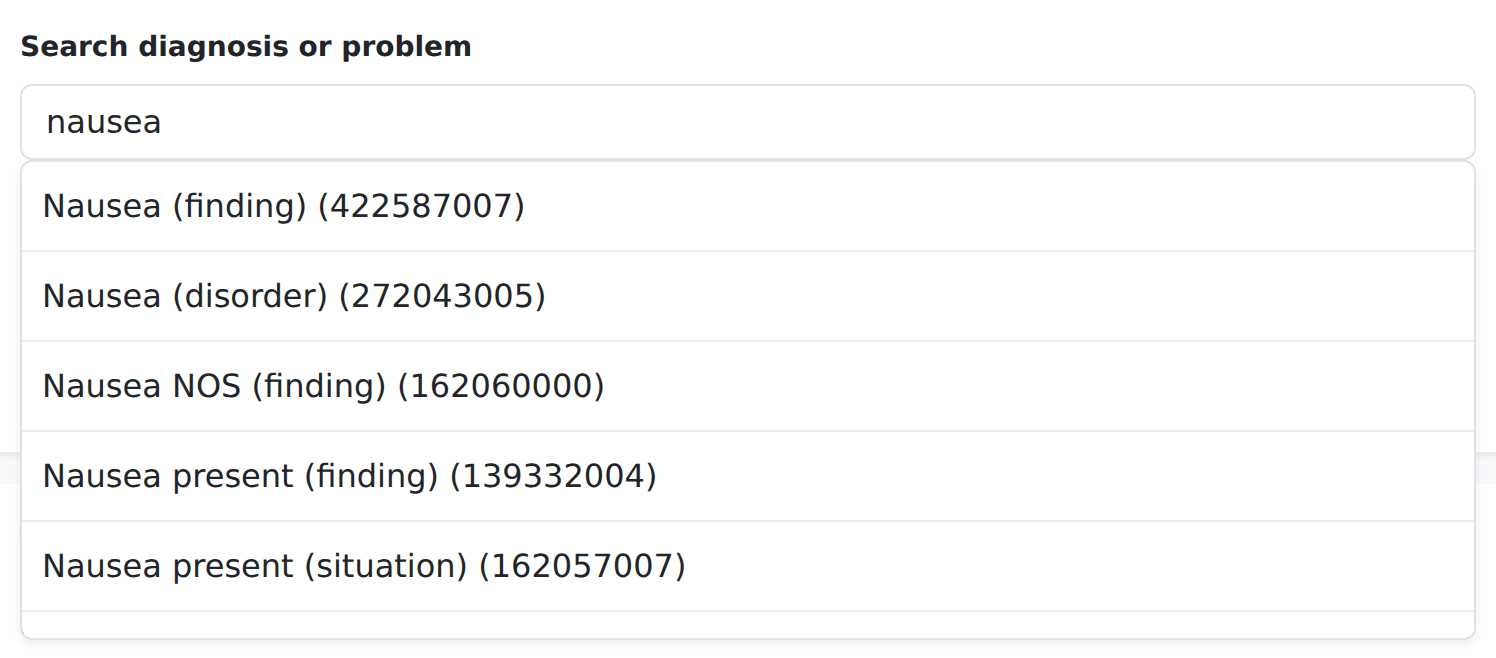
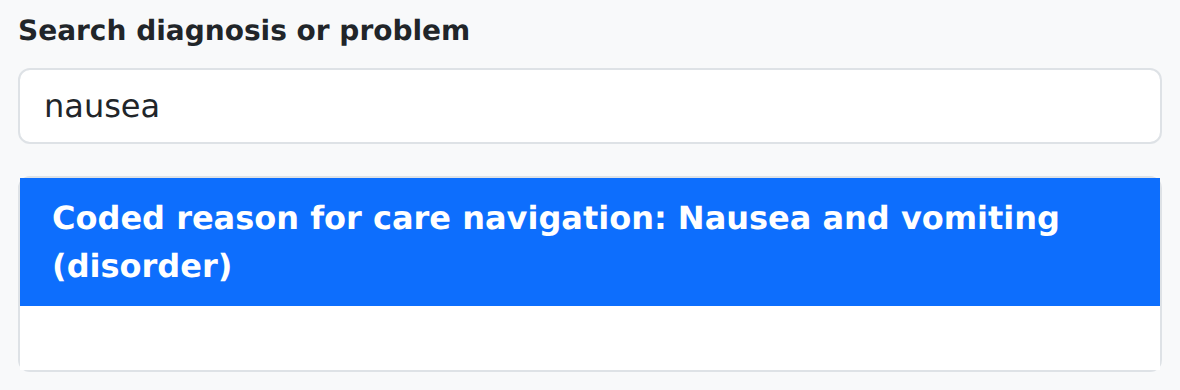
As your receptionist types, matching terms from the standard clinical vocabulary used across the NHS appear below the search box. Pick the one that fits and the appointment carries that term — not a paraphrase your team had to invent. The search is built for a front desk rather than for clinicians: two letters are enough to start it, and the closest matches come first.
The clinician opens the appointment knowing why
The coded reason sits on the appointment from the moment it is booked, so a clinician can read the day and see what is coming: the chest pain, the fatigue, the follow-up.
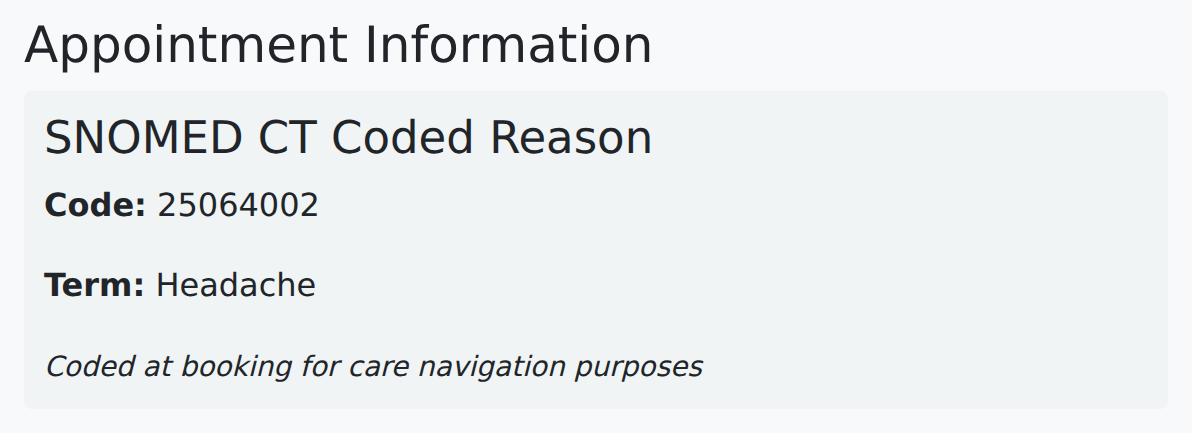 It is the difference between a list of names and times, and a list that has already been thought about once.
What the desk records, and what stays clinical
The receptionist records a coded reason for the visit — the minimum needed to route the appointment properly. The fuller clinical detail stays with the clinician and the registered manager, so a patient is not asked to explain their symptoms across a busy reception desk to get an appointment. It is a small thing that patients notice.
When a code is not the right answer
Not every visit fits a term, and the app does not pretend otherwise. Free text is always available: for a symptom that will not reduce to a term, for several vague complaints at once, for a patient who would rather not say much at the desk, or for something like "wants to discuss a test result". A receptionist who is unsure should type the patient's own words rather than pick a code that is nearly right — the record is only worth what is in it.
A record that stands up to inspection
The same symptom is coded the same way every time, whoever is on the desk, so a clinic's own record of why patients come is consistent rather than a pile of differently worded notes. That is the kind of evidence a CQC inspection asks for, and it is usually assembled in a hurry from memory.
Part of the VeriPath Health Clinics set
- Appointments — the list, the booking and the outcomes this coding sits inside.
- The full Health Clinics set