Periodontal Charting
Gum disease is judged on measurement, and a measurement is only worth the record it goes into. VeriPath Dental takes the six-point probe at the chair and keeps every reading — each tooth, each site — so the next exam is measured against a written baseline instead of against someone's recollection of last time.
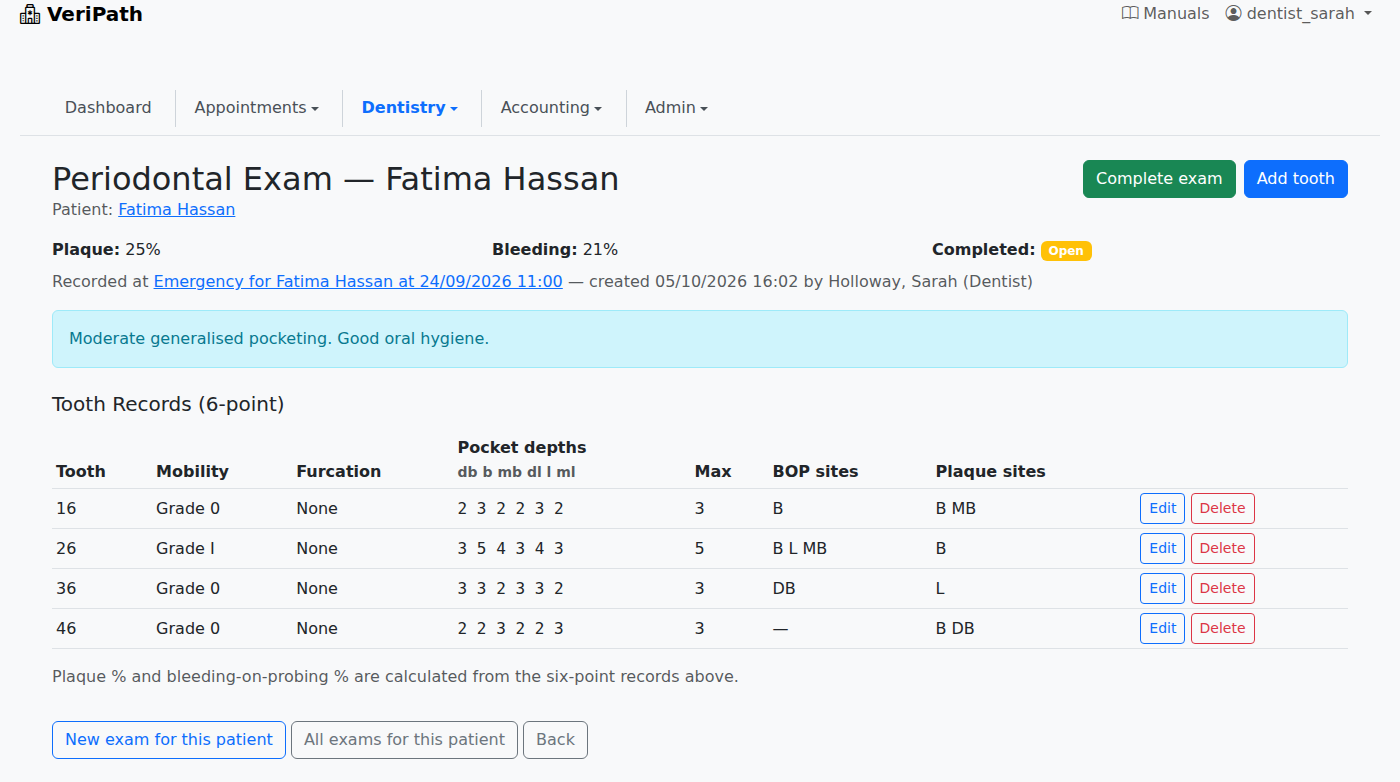
Six readings per tooth, charted as probed
The chart carries the six standard sites — three on the cheek side, three on the tongue side — with the pocket depth in millimetres at each. Recession is recorded against the site it was found at, bleeding on probing and plaque are ticked where they appear, and mobility and furcation are there for the teeth that call for them. What goes in is what the probe found.
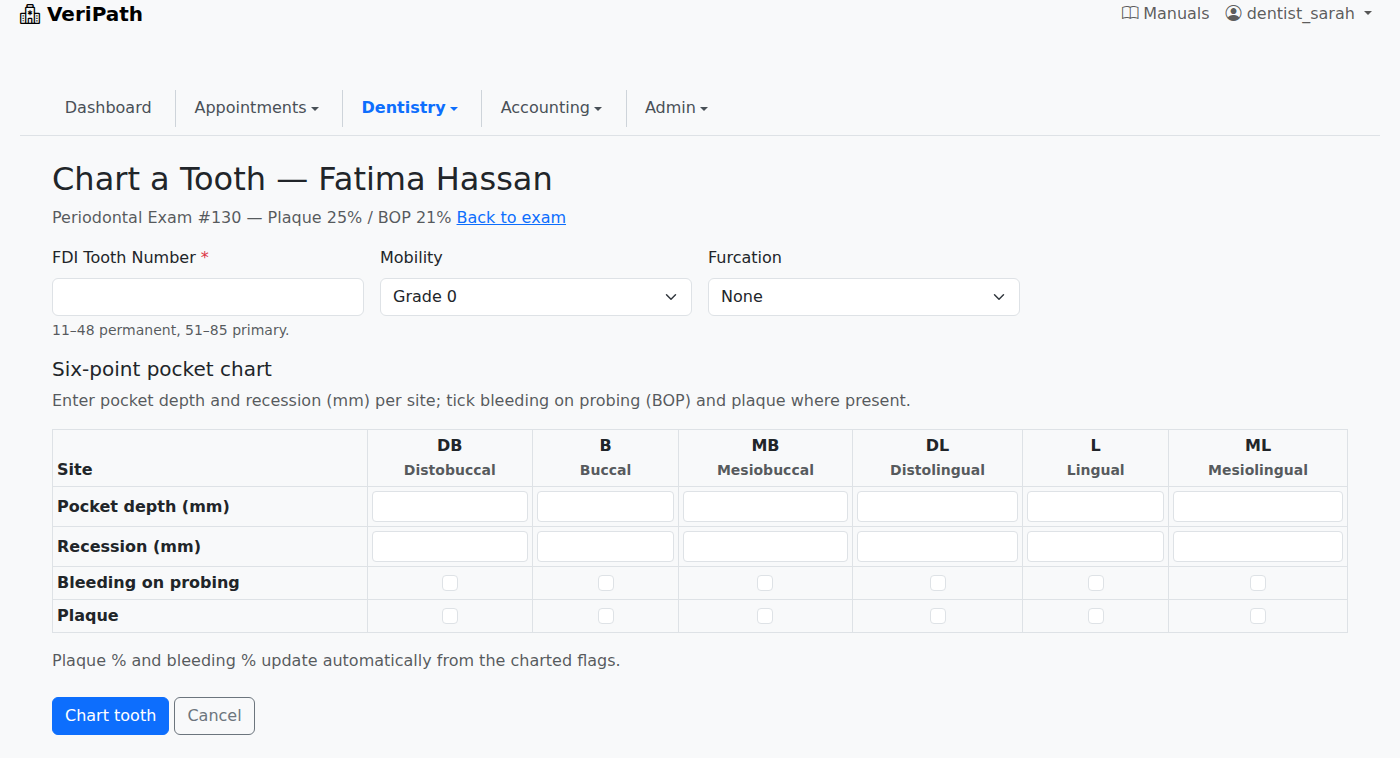
The scores work themselves out
Plaque % and bleeding % are calculated from what has been charted, tooth by tooth, so the practice has the same two comparable numbers at every exam without anyone doing the arithmetic afterwards. A chart with nothing on it yet says so rather than reporting a healthy 0%.
The whole mouth on one page
Each tooth is charted once and read back on a single table: the six depths, the deepest of them, the sites that bled and the sites carrying plaque, with mobility and furcation alongside. That is the difference between a record a clinician can read at the chair and a set of numbers scattered through notes — the deepest site on a tooth is a column, not a hunt.
Correct as you go, locked when it is signed
While an exam is open a tooth can be edited or taken off it, and the two scores are recalculated every time. Probing a full mouth does not always happen in one sitting, so an exam can stay open across visits and still be one chart at the end. Completing it stamps the date and the name of the person who completed it, and locks the record: the scores freeze and no further tooth can be added. A signed periodontal chart is evidence, so the app stops anyone editing it after the fact.
Anchored to the visit it was taken at
An exam is recorded against the appointment it was performed at, so the patient and the practice come from the visit and the chart is tied into the diary rather than floating beside it. It can be started from the patient's record or from the appointment itself, and a chart can be taken at any visit, not only at a check-up.
Where a full six-point chart belongs
This is the detailed record, taken where it is clinically indicated: at a check-up where screening has flagged deeper pockets, at gum-disease review and maintenance visits, and before and after treatment so the baseline and the outcome are both on file. The quick screening exam that decides when a full chart is needed is still recorded outside the app, and the full chart is what the practice keeps — clinical data, held on the Periodontal screens that reception does not have.
Part of the VeriPath Dental set
- Clinical Charting — the teeth these measurements belong to.
- Recalls — periodontal maintenance is recalled like any other interval.