NHS Contract & FP17 Claims
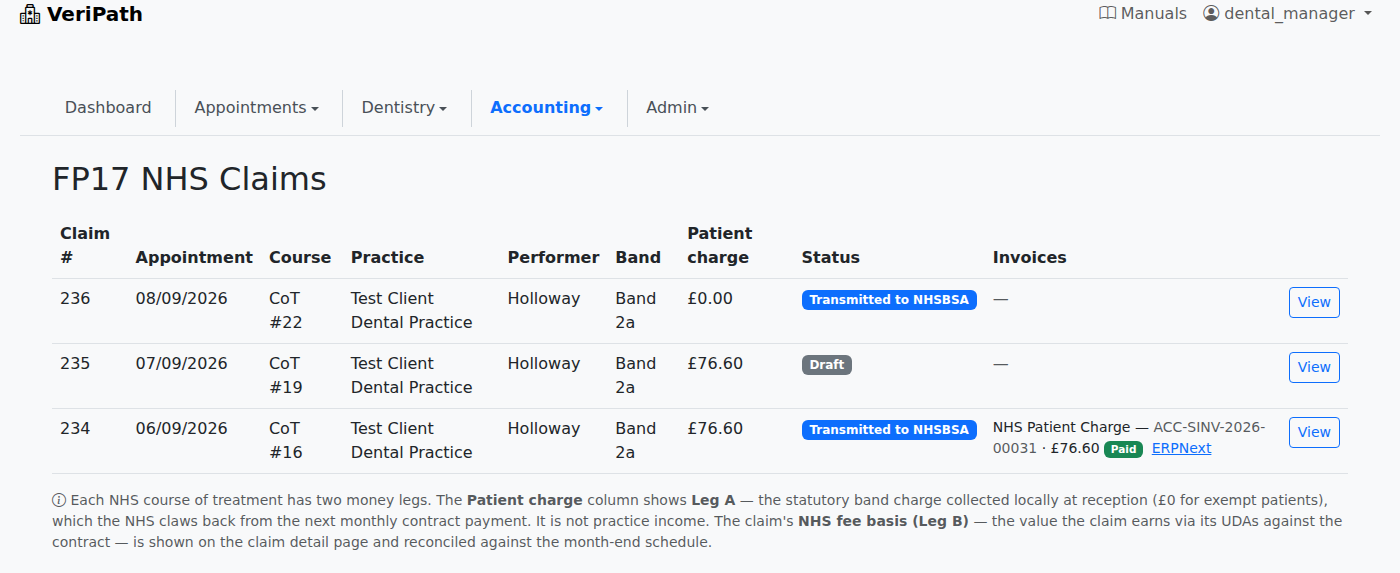
NHS dental money arrives in two halves that behave nothing alike — a band charge collected at reception that the NHS later takes back, and income earned in UDAs on the claims the practice submits. VeriPath Dental runs both halves for the practice: it builds the claim out of the work as the course closes, enforces the deadline that protects the UDA credit, and follows the patient's charge until the money is in the till.
The claim is made by the work, not after it
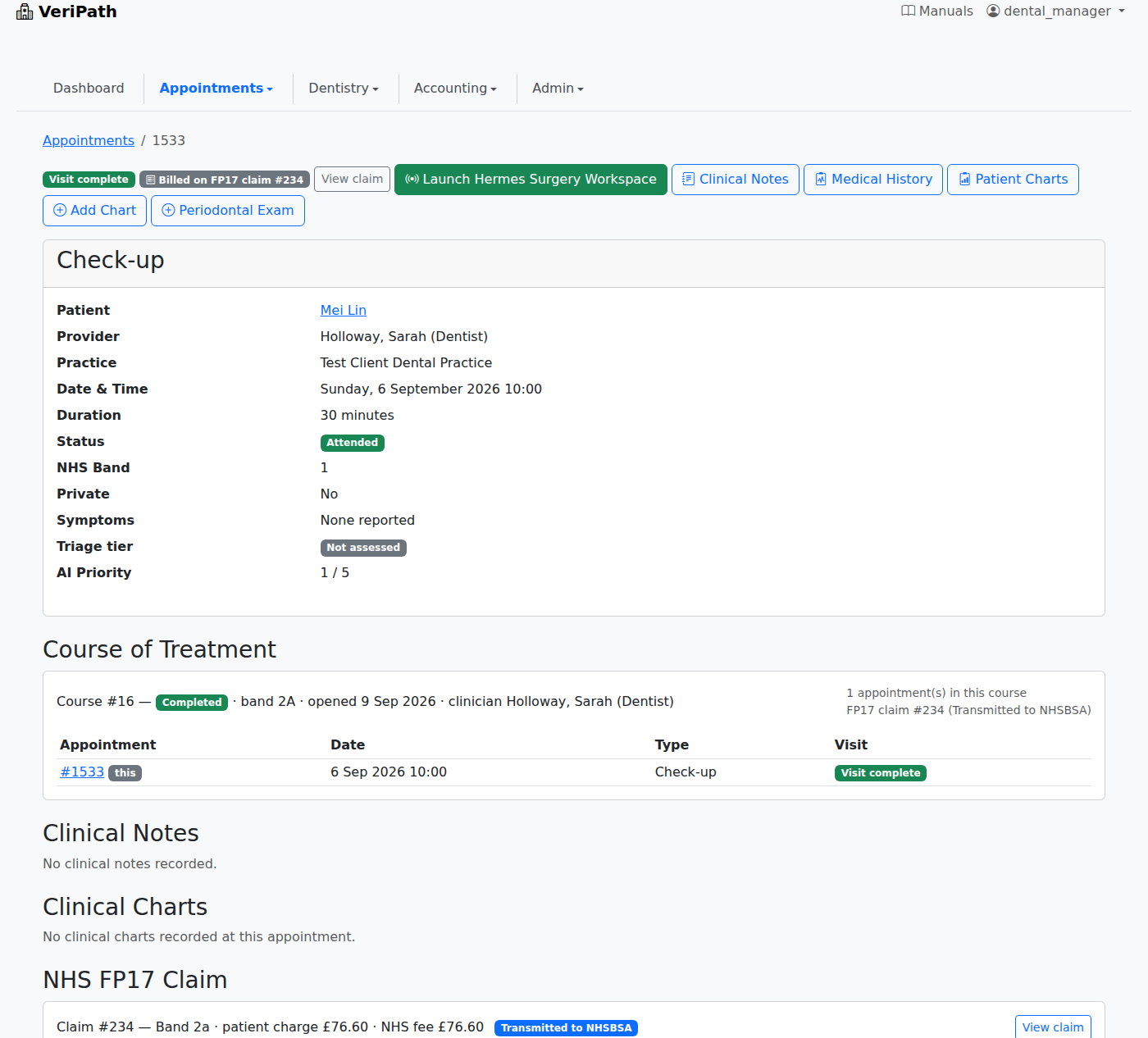
The app does the claiming at the moment the clinician closes the course, rather than leaving it to month end: the band is taken from the treatment completed — the highest band wins, so five fillings stay one charge — the statutory patient charge is attached, and the NHS fee basis is frozen there and then. Nothing is retyped from memory, and one course produces exactly one claim.
A course that runs across visits
Treatment that takes more than one appointment is still one episode. A patient who returns within two months of the last visit joins the course they came from, and the claim is made once, at the end, from everything the course did. The practice is not left reconciling two claims for one piece of work, and the patient is not charged twice for it.
The two-month window, enforced rather than remembered
A claim's UDA credit dies two months after the course it reports. The app marks a claim that has passed its window and blocks the submission, so the deadline that costs money is visible while there is still time to act on it.
Only one of the two legs is the practice's money
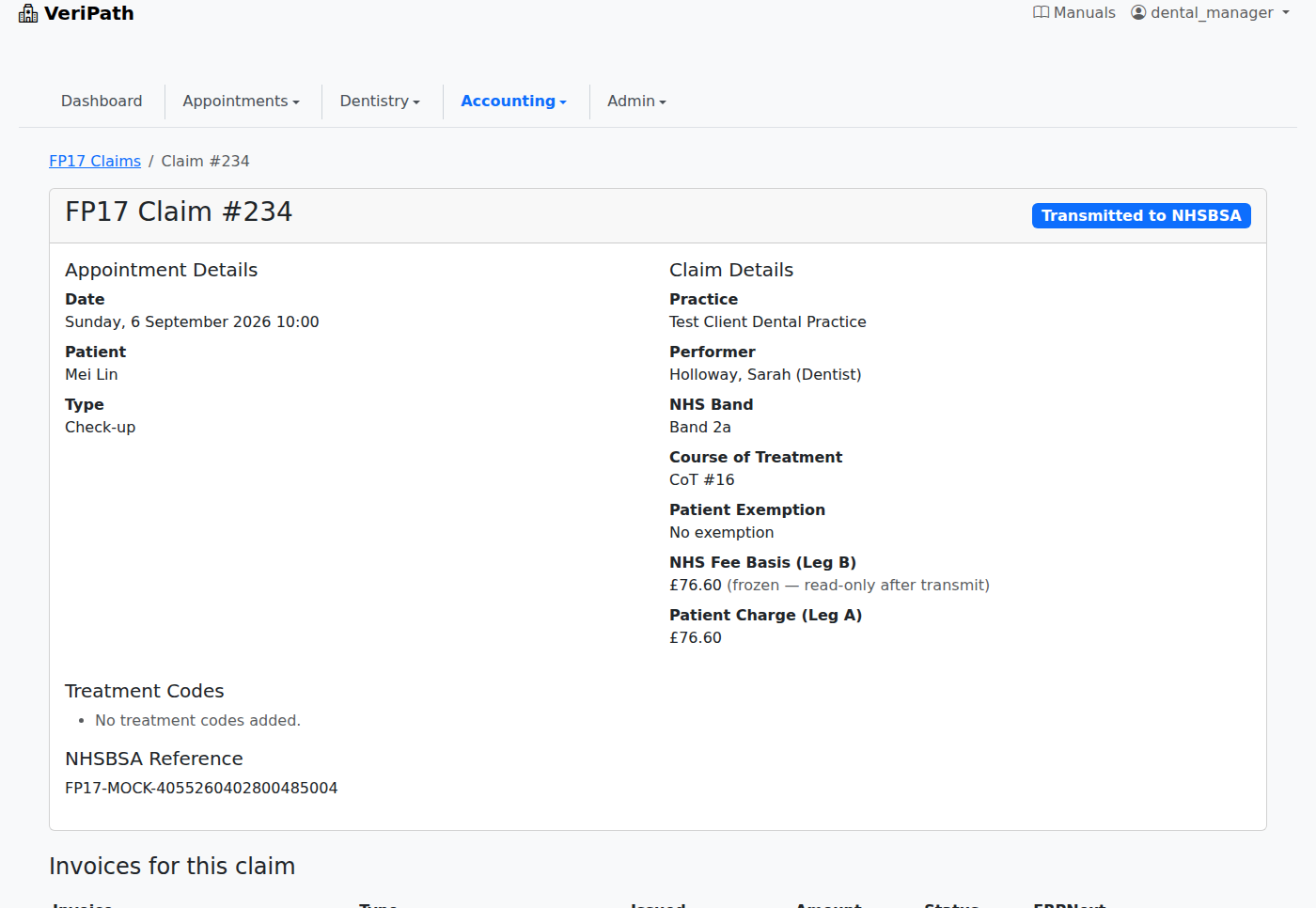
The claim labels its two figures the way the practice's own accounting does: the charge collected at reception, and the NHS fee basis the claim earns in UDAs. An exempt patient shows £0, with the exemption — and whether evidence was seen — recorded on the claim. Nobody has to work out which figure is income and which is money the NHS will take back.
The charge is followed to the till
Reception works one queue for money outstanding — every appointment still to be paid, with its funding basis on the row — and records the payment as cash, card, transfer or cheque. The transaction and its invoice settle together, so the band charge stops being something anyone has to remember. It is worth following, because the NHS reclaims that charge whether or not the practice collected it.
Sent, accepted, or sent back
A claim's state is visible from draft to accepted: transmitted to the NHSBSA with its gateway reference kept, partially paid, or rejected with the reason and returned to draft for correction. The invoice and the payment entry reach the practice's ERPNext books as they happen, and the claim shows the invoice it produced.
What the contract is carrying
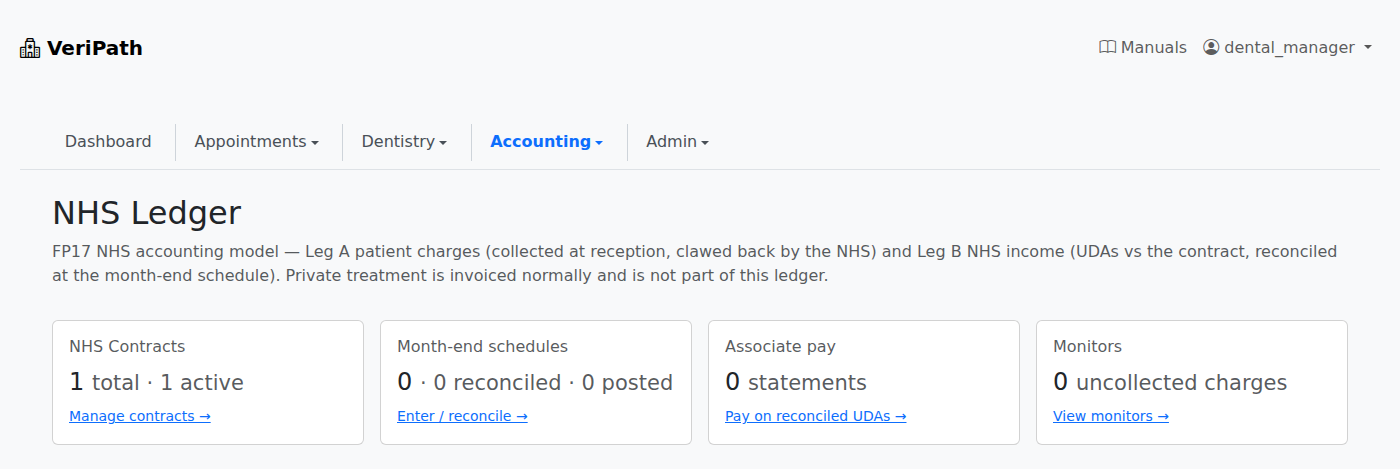
The app holds the contract — its annual value, its monthly payment and the UDA target — and shows what the delivered claims count against it, so a shortfall is visible while the year is still running rather than at the year-end clawback.
Part of the VeriPath Dental set
The claim is one part of the platform: treatment is charted as it happens, the course is booked and closed in the diary, and every accepted claim feeds the practice's own accounts. The Dental Surgeries overview gathers the rest.