Invoicing
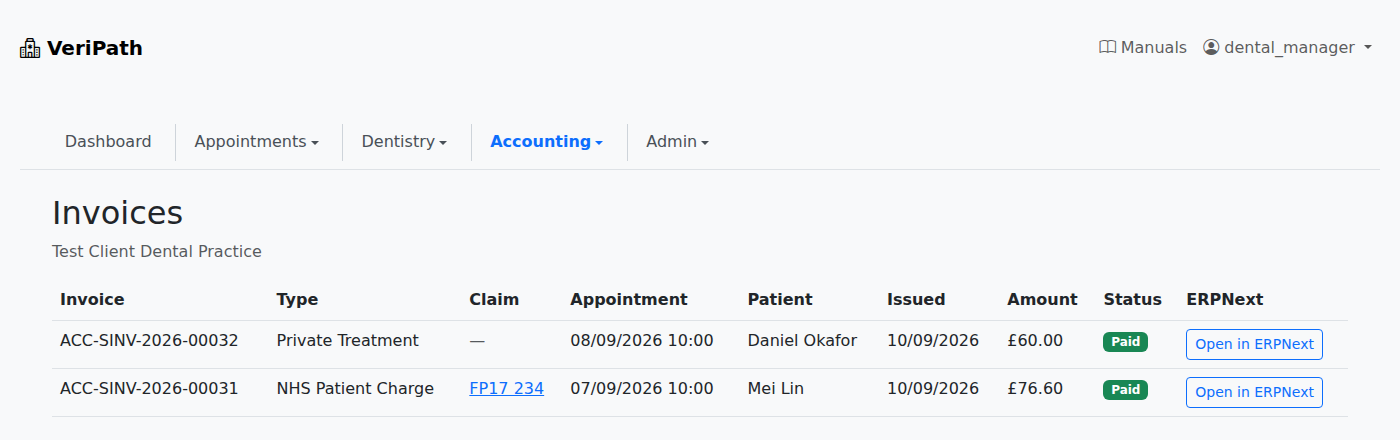
Nobody in the practice types an invoice. Every charge VeriPath Dental raises comes out of the clinical work as the course closes — the statutory band charge for an NHS course, the price-list charge for a private one — and each one appears in the practice's own ERPNext books under its own name.
Raised by the work, not at the desk
An invoice exists because a course of treatment was closed and billed. Nothing is invoiced at booking and nothing is invoiced on arrival, so a patient walking in has not been billed for a visit they have not had, and the practice has no half-raised paperwork to unpick when a plan changes.
One charge, one invoice
An NHS course raises the statutory band charge — £27.90 at Band 1, £76.60 at Band 2, £332.10 at Band 3 — and a course for an exempt patient raises no invoice at all, because there is nothing to collect; the claim still earns its fee basis. A private course raises a charge for each completed appointment at the price set on the practice's price list. One charge, one invoice, never two.
The invoice and the accounting record are the same document
Each charge is also created in the practice's ERPNext as a Sales Invoice with its own name against it. Open in ERPNext signs the manager in and opens that invoice directly, with its items, amounts and payment status as the accountant will see them. The name on the row tells the story: an ACC-SINV-… number means the charge is in the books, a local INV-… number means it has not synced yet.
Status follows the money
Draft, sent, paid, overdue, cancelled — the badge on the row is the state of the money rather than a label someone set. When the patient pays, the invoice settles to paid and the matching payment entry is recorded in ERPNext, so the practice's books and its appointment list agree without anyone reconciling them by hand.
The charge sits with the visit
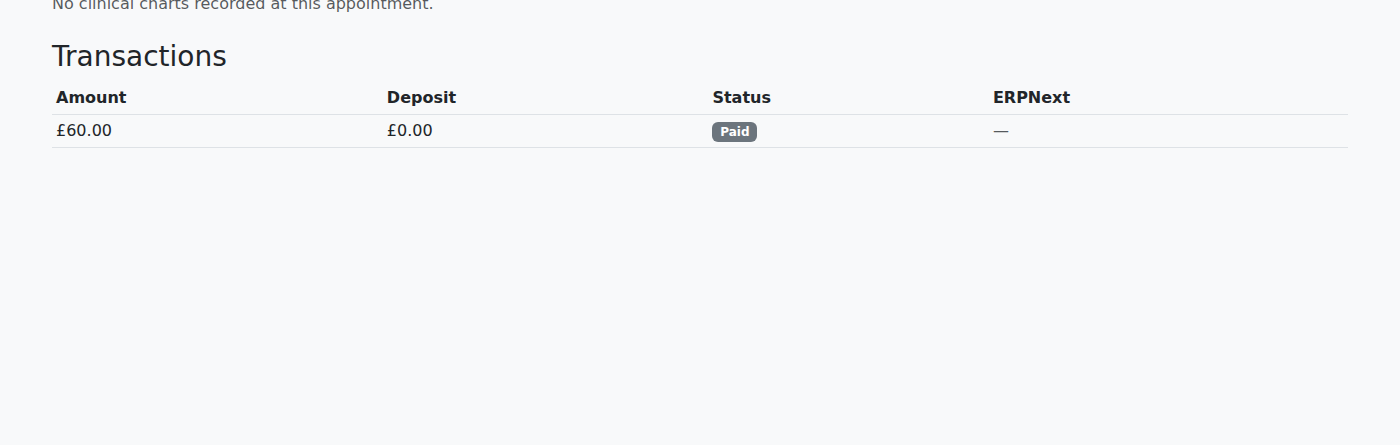
The amount, the deposit, the payment method and the status all sit on the appointment the charge came from, so "what did this visit cost, and has it been paid" is answered from the visit itself rather than from a ledger somewhere else. That is also what makes the patient charge visible to the people who take it: reception works one queue of what is outstanding.
The half of the money that is not the invoice
For NHS work the patient charge is only the half the practice collects on the NHS's behalf; the practice's own income is earned in UDAs on the claim, which is why every NHS invoice names the claim it belongs to rather than standing alone. Cancelled and retired invoices are kept out of the working list, so what a manager sees is money that is still real.
Part of the VeriPath Dental set
- NHS Contract & FP17 Claims — the claim each NHS patient-charge invoice belongs to.
- Appointment Booking — the visit the charge is raised against.