Appointment Booking
A dental diary carries more than times. It carries the practice's own rhythm — who works which days, how long a check-up really takes compared with a root canal, how much room to leave between patients — and it carries the money: whether this patient is being seen under the NHS or privately, and at which band.
VeriPath Dental builds the diary from the practice's own rules and captures the funding while the patient is still on the phone, not weeks later when the claim is being put together.
Your week, set once
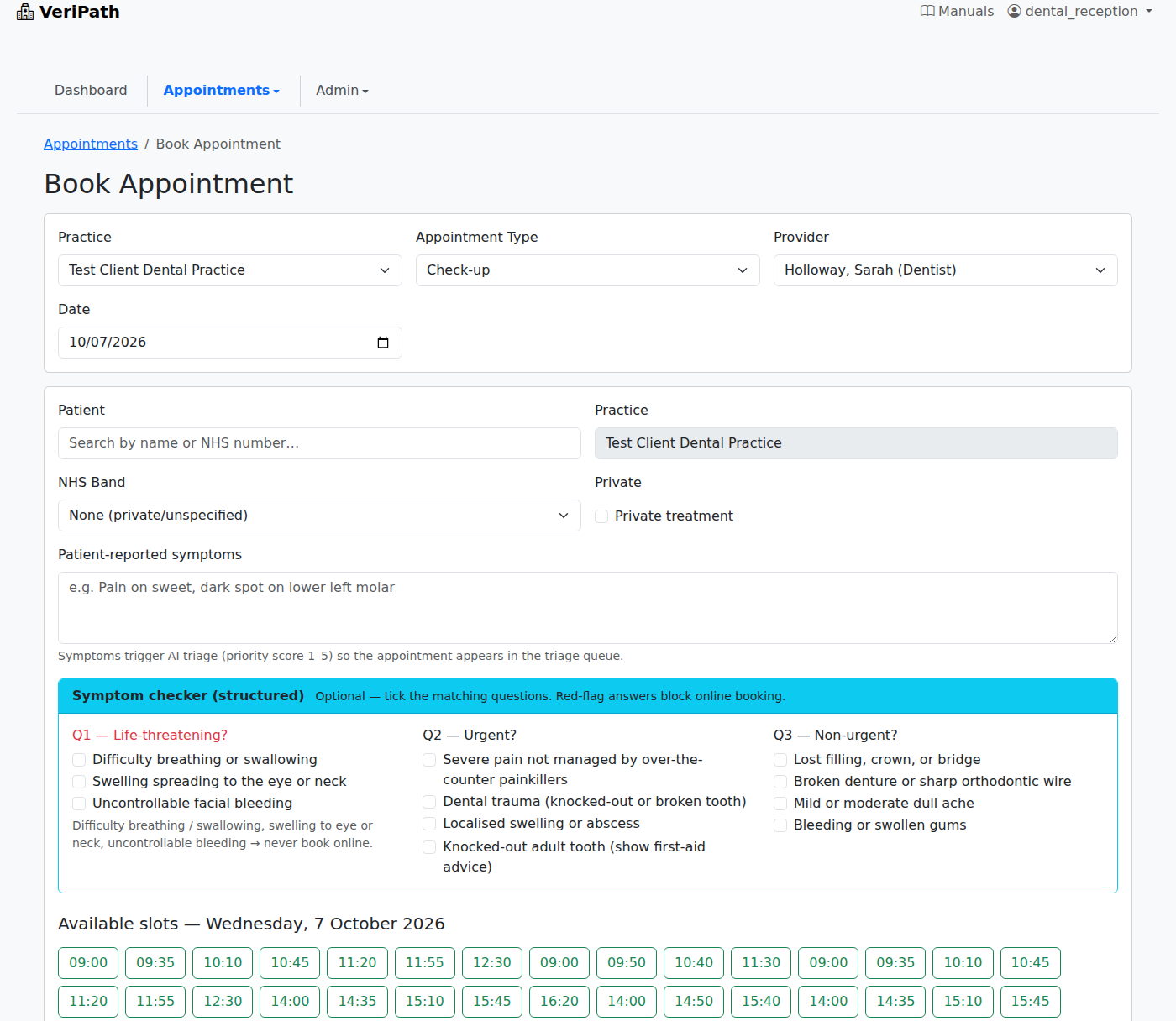
Each clinician's availability comes from the practice's own pattern: the days they work, the hours, the appointment type, and the turnaround left between patients. The calendar turns that into real, bookable slots — sized to how long the work actually takes, colour-coded by appointment type, so a glance tells the front desk whether it is looking at a check-up, a hygiene visit or treatment time. Nobody assembles the day by hand each morning, and a clinician's diary starts at the length the practice says it should.
Funding decided while the patient is on the line
NHS or private — and, under the NHS, the band that matches the treatment. It is a decision taken at the desk, and it is the figure that follows the appointment into the claim. Chosen in front of the patient, with the treatment in view, banding becomes a conversation rather than a reconstruction: the practice knows at the point of booking what it expects to be paid for the work.

The slot you clicked is the slot you book
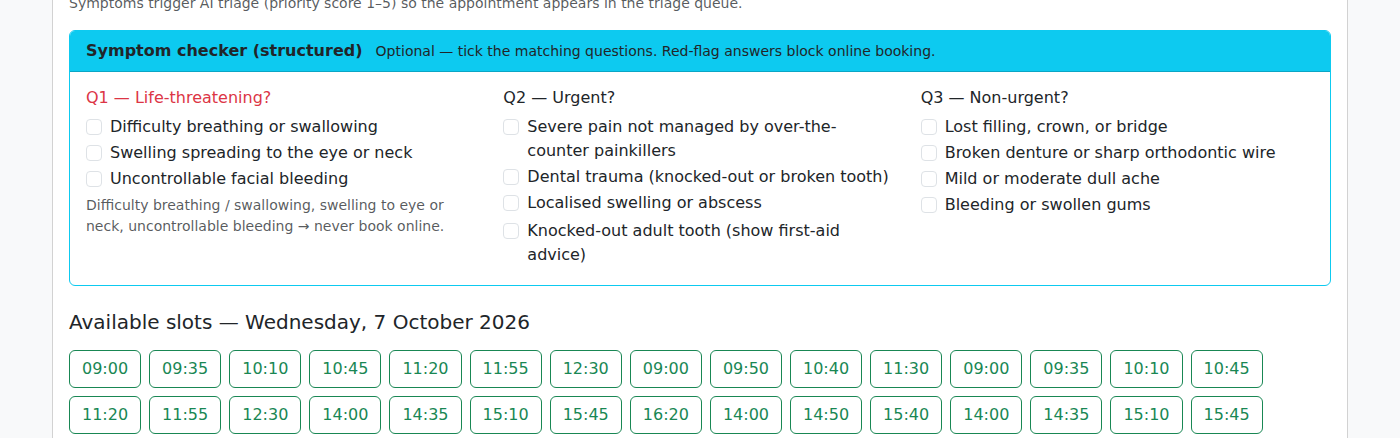
Book from the calendar and the form arrives already filled in — clinician, date, time, slot length — leaving the patient, the appointment type and the funding to confirm. Taken time reads as taken, so a double-booking is caught before it exists rather than discovered in the waiting room. The patient can be searched by name or NHS number first, which is also how a duplicate at the same time gets spotted.
Urgent cases go somewhere they will be seen
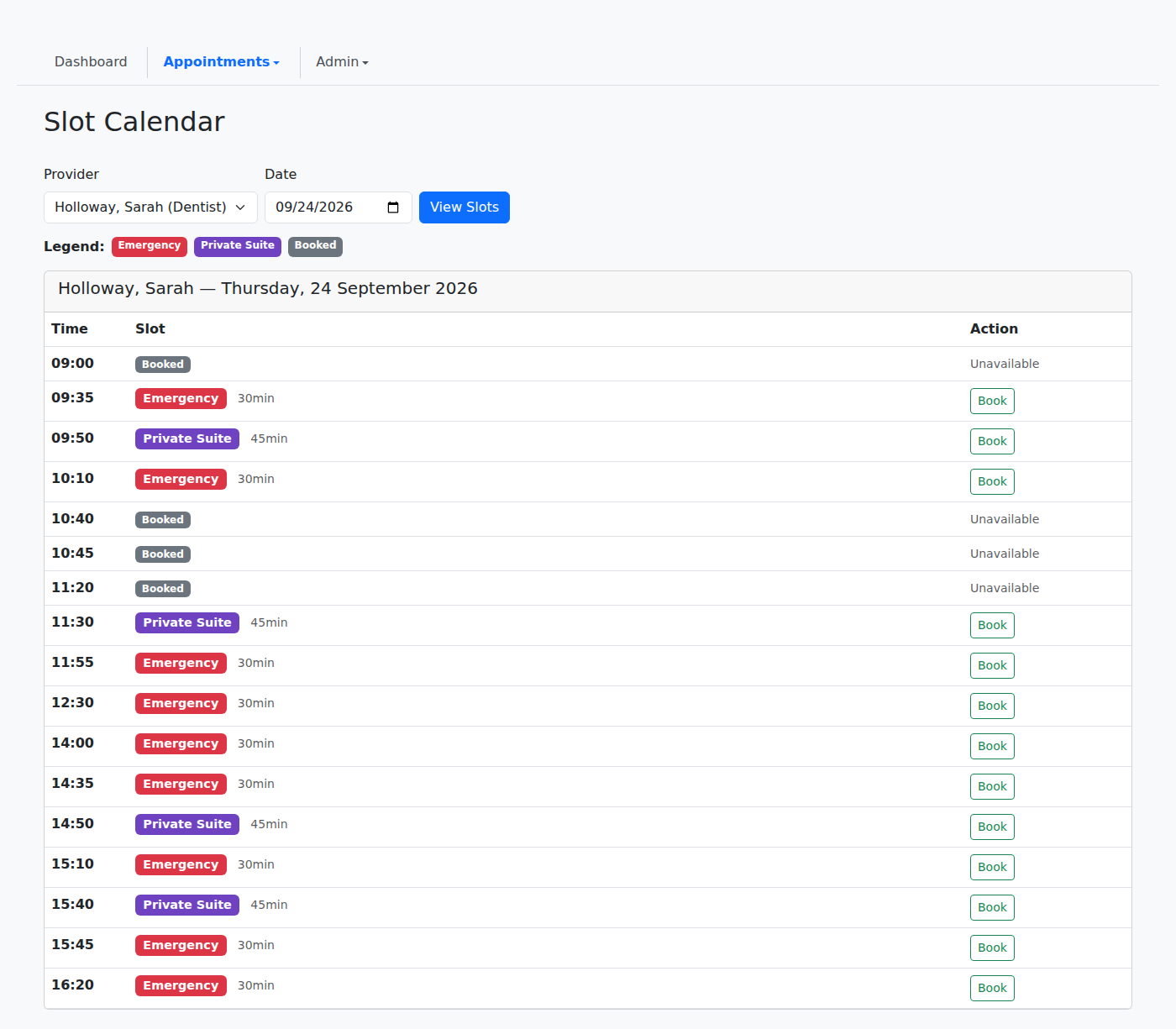
If the patient says something that matters — severe pain, a swelling, a knocked or broken tooth — it is typed into the booking as reported symptoms. The app scores it against the practice's triage rules and files it in the triage queue for a clinician's eye, with the clinical code attached. Where the practice wants the front desk to work through it, the structured checker asks the same questions every time, and a red-flag answer stops the booking outright rather than putting a life-threatening case in the diary.
A record of what actually happened
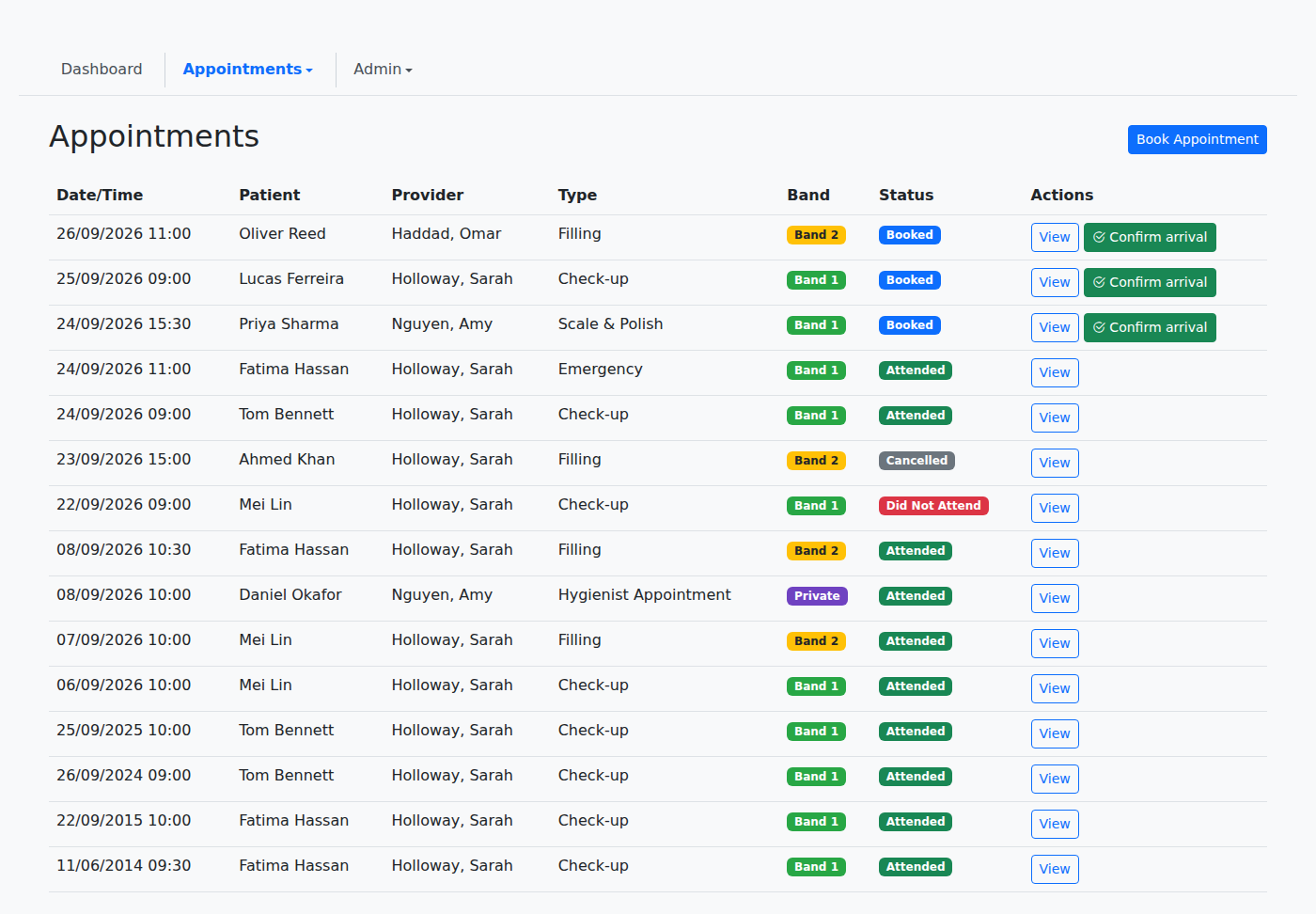
Every appointment carries its own outcome: booked, attended, did not attend, cancelled. The practice ends the month able to see the difference between the work it booked and the work that reached the chair.
Part of the VeriPath Dental set
Booking is where the patient's journey starts: the treatment is charted as it happens, the course closes into an NHS claim, and the charge is followed to the till. The Dental Surgeries overview gathers the rest.