Insurance claims & shortfalls

An insured patient is the work a private clinic most wants and the money it most often loses: the clinic treats, the insurer pays part of the charge, and the difference — the shortfall — is a small invoice nobody has time to raise. VeriPath Health Clinics keeps the claim, the codes it needs, the export to the clearing house and the patient's balance in one place, and posts both halves of the money into the clinic's own books.
Every claim in one queue
Each insured appointment becomes a claim, and the billing queue is where the practice works them: filter by the state a claim is in — ready for export, exported in a batch, awaiting the patient's balance, fully settled — and each row carries the insurer, the policy number, the charge, the balance still owed and the one action that claim needs next.
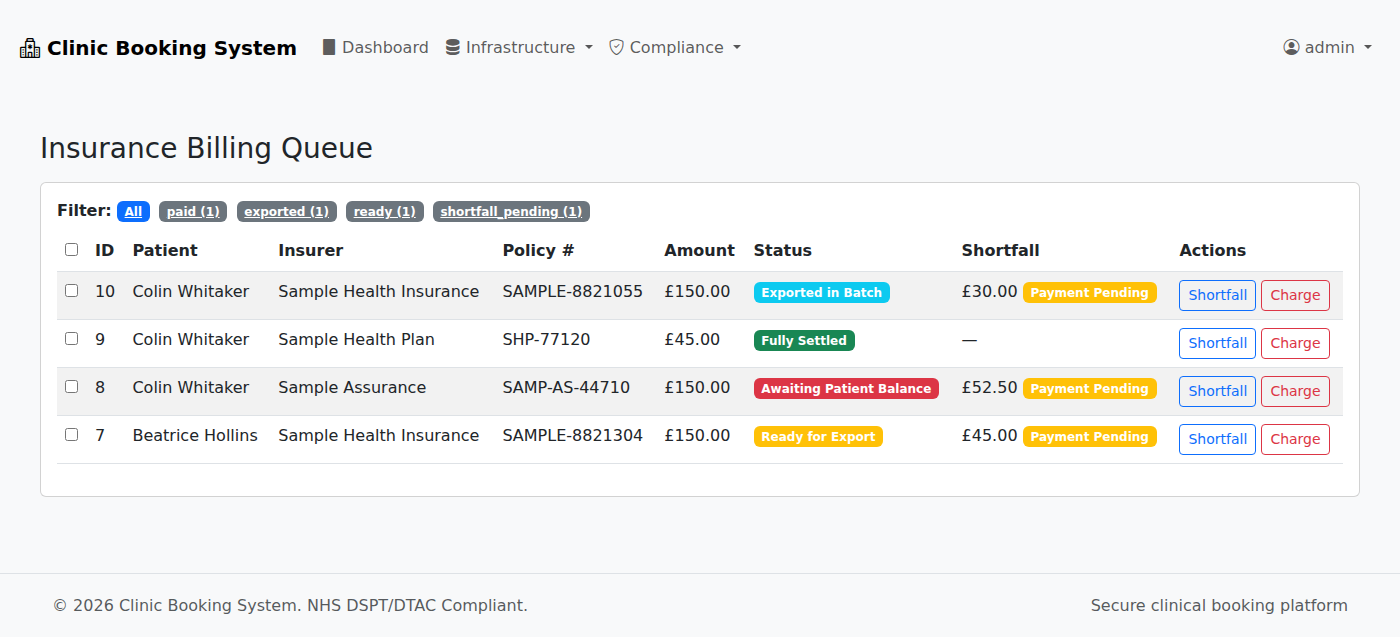
The claim carries what the insurer asks for
Policy number, the pre-authorisation the insurer issued, the ICD-10 diagnosis code and the CCSD procedure code: recorded on the claim and on the appointment's insurance panel, so whoever does the billing is not hunting back through the notes for a code the insurer will reject the claim without. The diagnosis itself is entered as a code in the clinical record, and the platform carries a SNOMED-to-ICD-10 mapping behind it.
Exported in the format the clearing house wants
Select the claims and the app builds the file the clearing house takes — one XML batch, in the insurer's own field names (insurer code, policy, pre-authorisation, ICD-10, CCSD and the amount due to the insurer). The batch is kept as a record of its own: its reference, the claims inside it, the total, and the file itself, so a claim that has to be re-sent is re-downloaded rather than rebuilt, and the claims it contained are marked exported.
The shortfall is raised, not forgotten
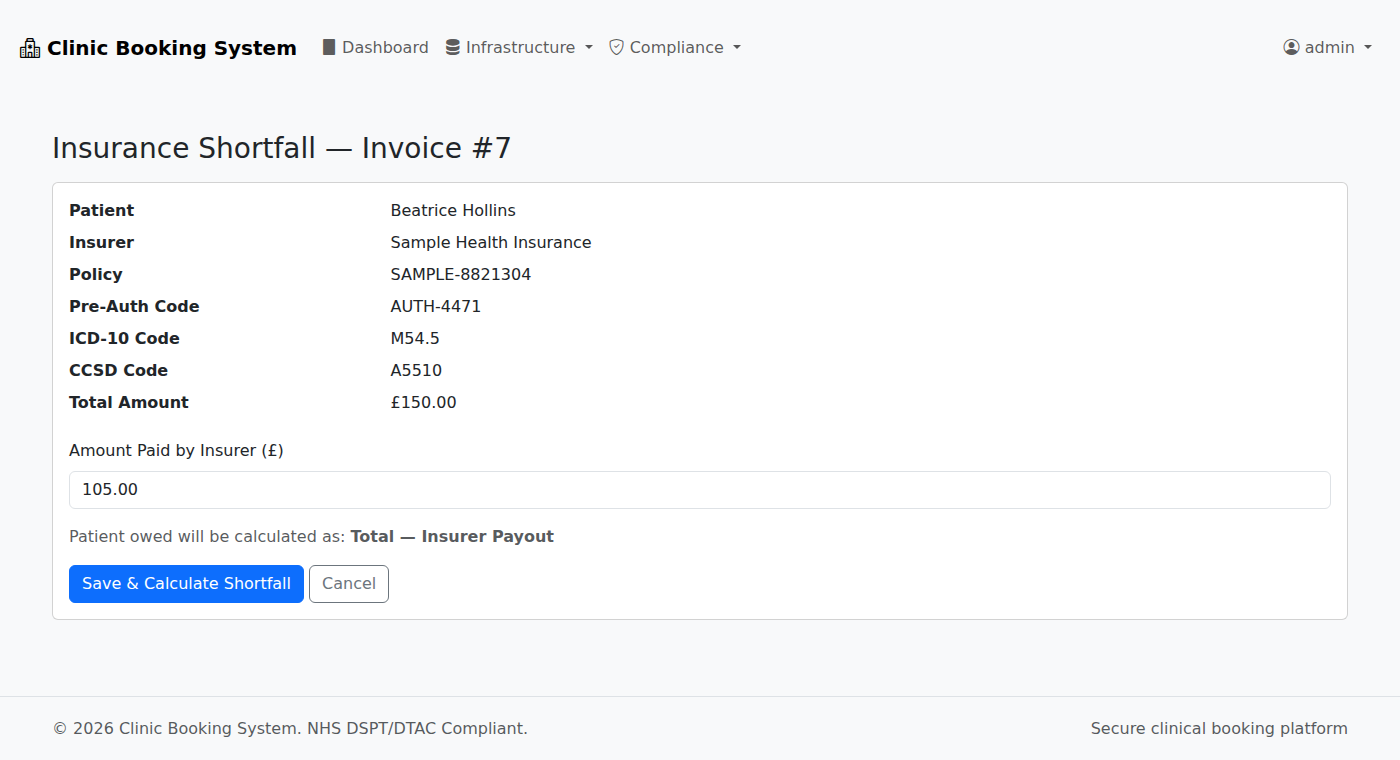
The insurer pays less than the clinic charged. The balance becomes the patient's, and the shortfall screen works it out — the charge less the insurer's payout — then takes it from the card the patient left on file, off-session, without anyone having to ring them. The result sits on the claim: payment pending, collected, or failed; a failed card leaves an invoice the patient can settle themselves, and when the money arrives the claim and the appointment are marked paid.
Both halves reach the books
A claim posts to the clinic's accounts as two documents, not one: the insurer's share as an invoice against the insurer — money owed by insurers, kept apart from money owed by patients — and, where there is a balance, the patient's shortfall as an invoice of its own. The claim keeps both document numbers, so either half can be followed from the app into the books, and insurer receipts never mix with patient money.
Part of the VeriPath Health Clinics set
- Accounting app — the clinic's own books, where a claim's two documents land.
- Appointments — the insured appointment the claim comes from.
- The full Health Clinics set