UDA Auditing
An NHS contract pays for Units of Dental Activity the practice has not earned yet, and the reckoning comes at the year end: deliver too few and the money comes back out, deliver far too many and the practice has worked for nothing. VeriPath Dental runs that count all year. Each clinician's contract allocation sits beside what their transmitted claims have actually produced, so the position is visible in April and in March.
Nobody types the numbers in
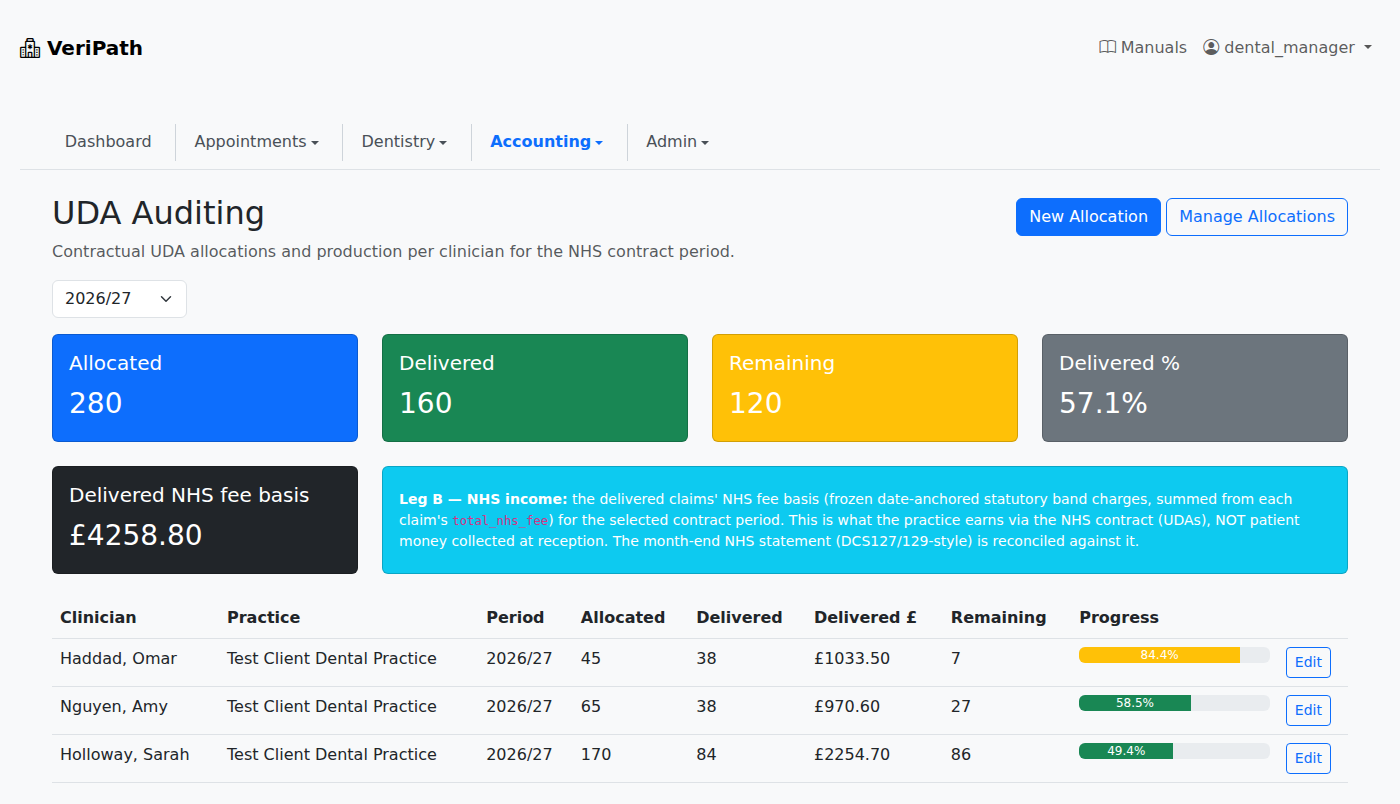
Delivered UDAs are never entered anywhere. They are counted from the FP17 claims the practice has transmitted, each credited at the value of the band the course closed at — a band 2a course is three UDAs, band 3 is twelve, an urgent course carries the contract's own urgent value, and an exempt course its catalogue value. A draft or a rejected claim counts for nothing, so the figures cannot drift from what the practice has actually sent.
Every clinician's position on one screen
The dashboard opens on the practice's totals — allocated, delivered, remaining, the percentage delivered — and a row for each allocation underneath: the clinician, the period, what they were contracted for, what their claims have credited, what is left, and the NHS fee basis those claims carry. The progress bar reads at a glance: green while a clinician is under 80% of their allocation, amber from 80%, red once it is met or passed.
The pound figure is the practice's NHS income, not the money in the till
Alongside the UDA counts sits the delivered NHS fee basis — what the delivered claims earn through the contract. It is the figure the month-end reconciliation works from, and the page says so in place, because it is not the band charge collected at reception: that money is collected on the NHS's behalf and claws back out of the next contract payment.
The period is the practice's, not the app's
UDAs credit to the period the claim was transmitted in, so a course finished in March but sent in April belongs to the new contract year — which is how the NHS counts it too. Choose a period and the totals, the fee basis and the table all follow it; no year-end recalculation by hand.
History is kept, not deleted
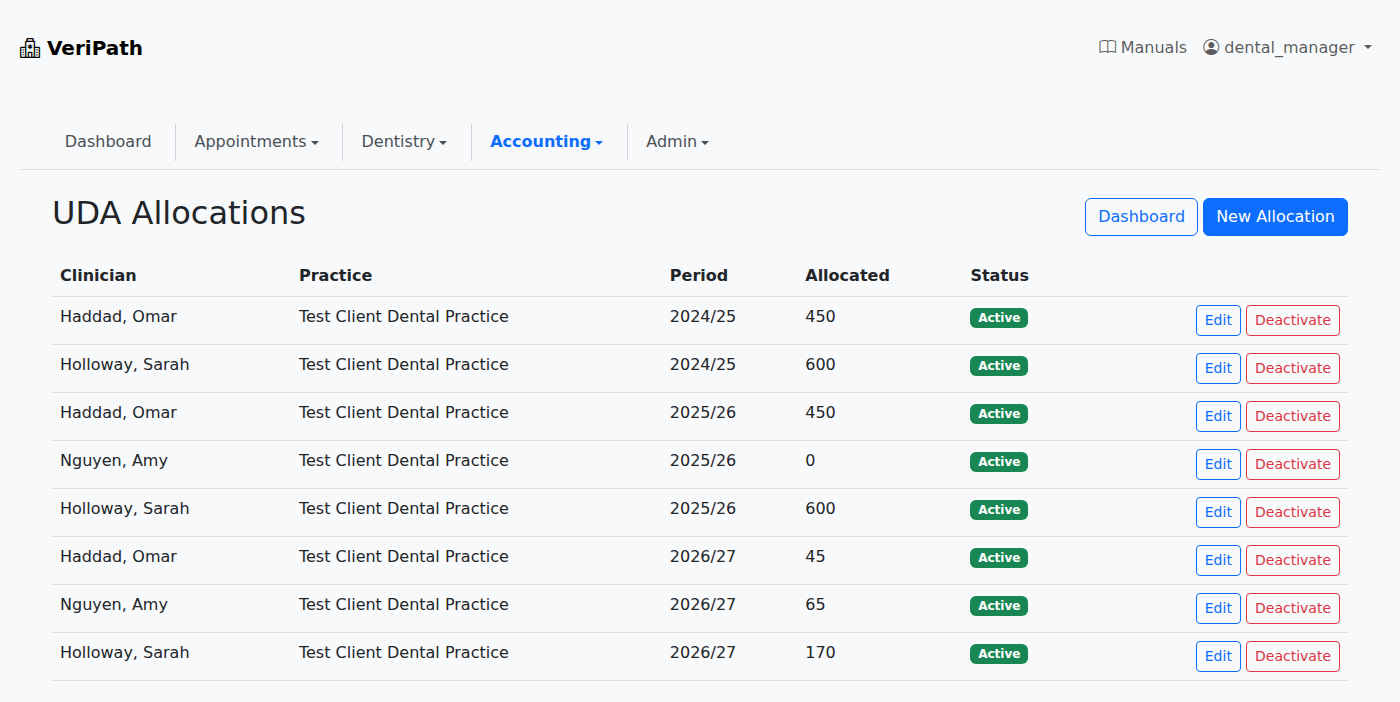
One allocation per clinician, per practice, per contract period — attempt a second and the app keeps the existing row and sends you to edit it. When a clinician leaves or a contract ends, the allocation is deactivated rather than deleted: it stops counting as current while staying in the record.
Setting the year up takes a minute
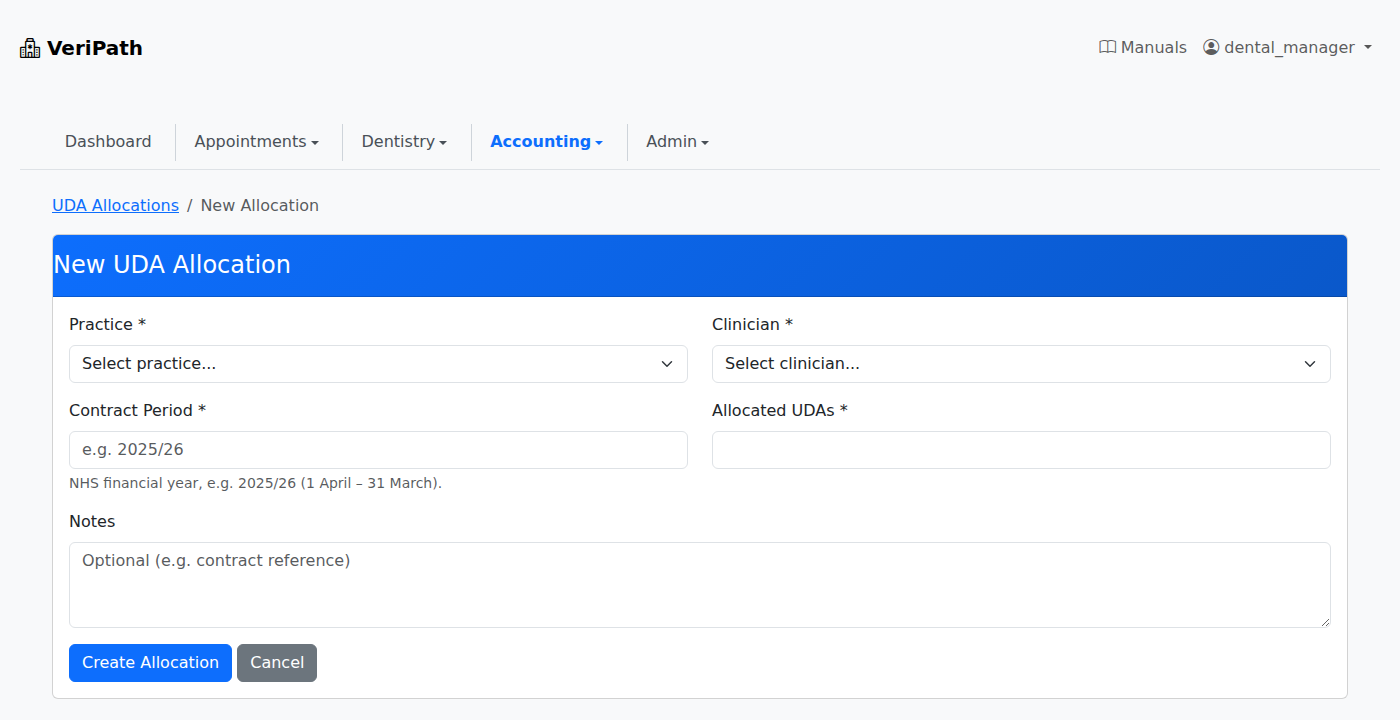
Practice, clinician, contract period, the UDA figure, and a note for the contract reference. Set it once as the contract year opens; the dashboard does the arithmetic from the claims all year.
Part of the VeriPath Dental set
- NHS Contract & FP17 Claims — the claim that credits each UDA.
- Accounting — where the contract's money lands.